
Spode Blue Italian Casual Dinnerware
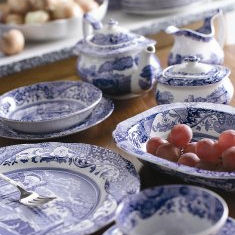
Spode Blue Italian Causal Dinnerware is a favorite amongst collectors. The dinnerware has been in production for nearly 200 years and features a blue and white pattern that depicts classic ruins in a pastoral Italian countryside. The pieces have an unusual combination of Western and Eastern influences with intricate patterns, footed pieces and distinctively peaked handles. The technique used to produce the unique blue and white pottery was originally invented in the Far East, but was soon recreated in England using modern technologies that made the process faster and less expensive. Spode Blue Italian Casual Dinnerware replicas are affordable, durable and every bit as collectible as the original Asian designs. The pieces have high-gloss finishes to maintain their beauty for years to come.
The Spode Blue Italian Casual Dinnerware Collection is microwave and dishwasher safe. Select bakeware is also rated as oven-to-table safe.

Loading...
